Healthcare workers face a significantly higher risk of workplace violence compared to other professions. Statistics reveal that 73% of workplace assaults occur in healthcare, even though healthcare workers make up only 12% of the workforce. The rate of nonfatal workplace violence injuries resulting in time away from work for healthcare workers was over 3 times higher than the average across all industries.
Furthermore, according to Gun Violence Archive (GVA), between 2018 and 2023, the nation witnessed a significant increase in mass shootings, signaling a shift towards a more volatile security environment. For many, the fear of deadly weapon events combined with doubts about their employers’ ability to ensure their safety has led to resignations, exacerbating staffing shortages across the industry.
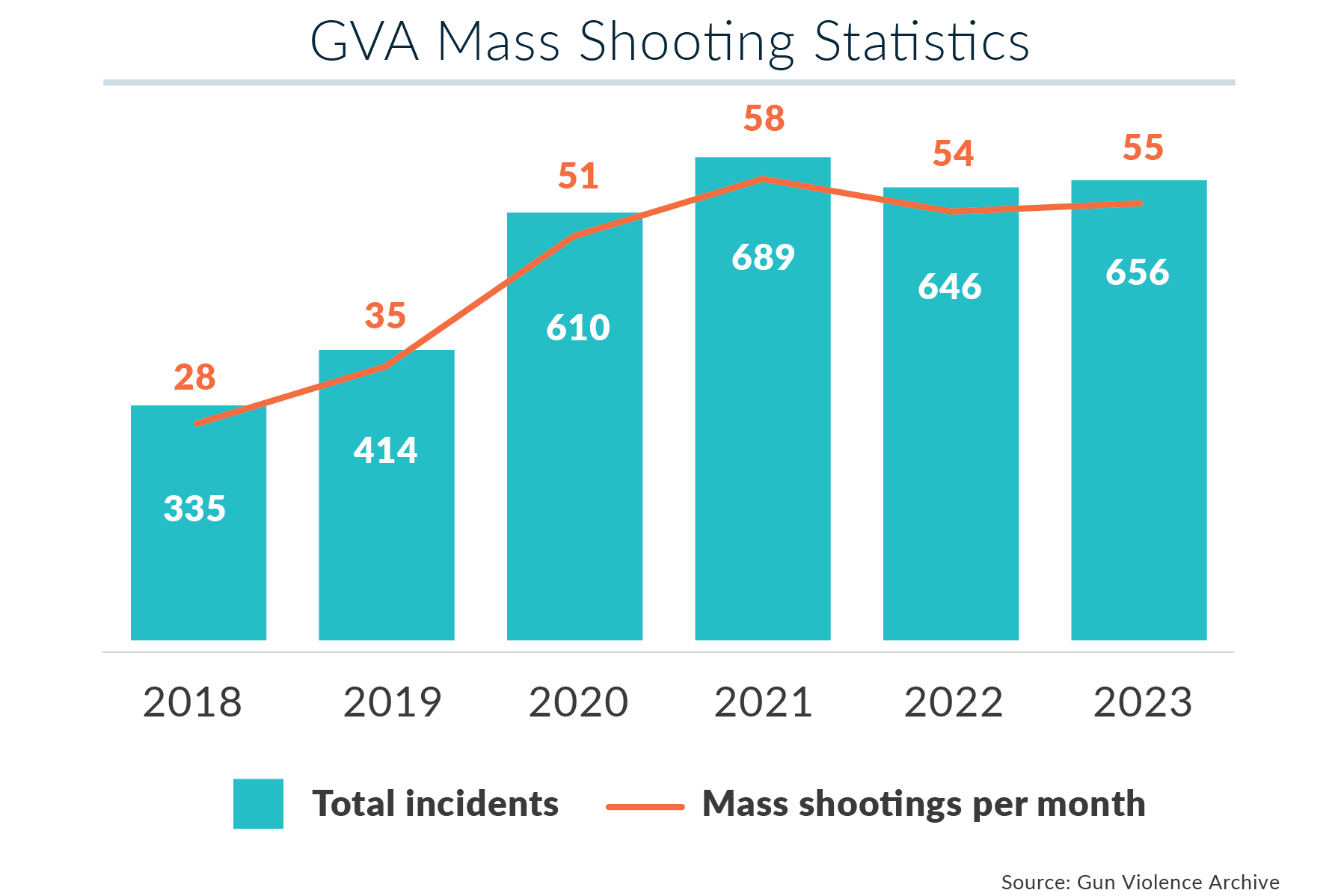
This surge in violence is compounded by societal stressors such as economic hardship, political polarization, extremism and the lingering effects of the pandemic. Healthcare organizations must recognize that violence prevention and response strategies are no longer optional – they’re essential.
Healthcare: The Epicenter of Workplace Violence
Healthcare settings are uniquely vulnerable due to their open-door policies, high-stress environments and the presence of immobile or vulnerable patients. Additional risk factors include:
- High Emotional Stress: Patients, families, and staff operate in high-stakes, emotionally charged settings.
- Concentrated Vulnerability: Hospitals house immobile patients and a high volume of people in confined spaces.
- Ease of Entry: Open access to facilities increases risks, while limited security funding leaves vulnerabilities unaddressed.
- Weapon Accessibility: Medical equipment can easily be turned into makeshift weapons.
This exposure to violence not only endangers employees but also erodes the quality of care, reduces morale and heightens staff turnover.
Liability and Financial Risks for Healthcare Organizations
The impact of workplace violence extends beyond physical and emotional harm to legal and financial exposure. Employers face obligations under the General Duty Clause to maintain a safe workplace, and emerging legislation like the Prevention of Workplace Violence in Health Care and Social Assistance Act intensifies accountability.
Potential liabilities include:
- Employee Injuries: While workers’ compensation may provide some coverage, it often excludes independent contractors, employee vs. employee and domestic violence related incidents.
- Patient and Visitor Harm: Traditional liability policies may contain exclusions or delay coverage, leaving healthcare facilities financially exposed.
- Business Interruptions: Facility closures and resource diversion during incidents result in revenue loss and operational strain.
- Reputational Damage: Poor incident response can irreparably harm an organization’s reputation.
Proactive Solutions: Prevent, Respond, Recover
Healthcare organizations must adopt a comprehensive risk management approach to mitigate the increasing threat of workplace violence and active assailant incidents. This strategy should integrate prevention, immediate response and post-incident recovery.
1. Prevention Services
- Violence Protection Program Framework and Team
- Comprehensive Risk Assessment
- Enhanced Security Measures (Physical Security Assessments)
- Program Framework Document
- Policies (Weapons, Bullying, Hostile Workplace, Sexual Harassment)
- Procedures (Background Checks, Performance Reviews, Terminations)
- Plans (Critical Incident Response, Security, Crisis Management, Crisis Communications)
- Training (Threat Management Team, Critical Incident Response, Behavioral & De-escalation Training)
- Awareness, Anonymous Reporting
- Active Assailant Drills
- Open-Source Intelligence Monitoring
- Risk Transfer- Insurance
2. Immediate Response During an Incident
The first moments of an active assailant incident are critical. Rapid, informed decision-making can mean the difference between an emergency and lasting consequences. The availability of crisis response services as part of an Active Assailant Program provides essential support, including:
- Victim Assistance: Psychological first aid, family support and counseling.
- Legal and Media Management: Evidence preservation and public messaging.
- Threat Assessment: Coordinating enhanced security to mitigate further risks.
3. Recovery and Business Continuity
After an incident, organizations need robust plans to minimize disruption and support those affected. Critical recovery elements include:
- Crisis Communication Plans: Effectively address concerns of employees, patients and the public.
- Business Interruption Insurance: Mitigate financial losses from facility closures or operational delays.
- Comprehensive Support Services: Provide trauma care for employees and rebuild trust among stakeholders.
The Role of Tailored Insurance Solutions
Traditional insurance policies often fall short in addressing the complex and evolving risks posed by workplace violence and active assailant events. The emergence of active assailant insurance has provided healthcare organizations with vital support. However, not all active assailant policies are created equal. As the market for these products grows, significant variations in coverage and support make it crucial for healthcare leaders to thoroughly evaluate their options.
The effectiveness of an active assailant policy hinges on its specific features, which can differ in key areas:
- Timing of Coverage Activation: Policies vary in when services are triggered, which can impact an organization’s ability to respond swiftly and mitigate risks.
- Crisis Management Services: Some policies offer comprehensive post-incident support, including legal counsel, public relations assistance and trauma counseling, while others provide more limited resources.
- Business Interruption Coverage: Differences in how policies address revenue loss, facility closures and operational disruptions following an incident can significantly affect recovery.
- Liability Protections: Coverage for legal claims brought by employees, patients or visitors injured during an incident may vary widely.
- Specialized Support: Some will carriers provide 24/7 support when the insured is made aware of a circumstance that may result in an act of violence.
To protect their staff, patients, and operations, healthcare organizations must choose policies that align with their specific risks and operational priorities. In doing so, leaders can ensure not only robust support after an incident but also a greater ability to minimize the likelihood of such events occurring in the first place.
Reach out to an Advisor
The rise in violent workplace incidents signals a critical need for healthcare organizations to reimagine their approach to safety. By investing in proactive prevention measures, effective response plans and robust recovery strategies, healthcare leaders can protect their staff, patients and operations from the devastating effects of workplace violence.
At RCM&D, we are committed to working with healthcare organizations to navigate these challenges, offering comprehensive risk management solutions and insurance solutions to address your unique requirements. Contact an advisor to learn more.